A spline shaft transmits torque to a hub through several teeth cut around its circumference instead of a single key. You find spline shafts on tractor PTOs, in gearboxes, on drive shafts and in hydraulic pumps. This guide explains the types of splines, the standards they are specified to, how the hub is centred and how a spline shaft is machined.
What a spline shaft is
A spline shaft carries a series of teeth (the splines) on its outside that engage matching spaces in a splined hub. Compared with a keyed joint, the torque is shared by all the teeth, so the joint carries more, centres better and, when needed, lets the hub slide along the shaft, as in gearboxes or telescopic drive shafts.
Types of splines
| Type | Profile | Common standard | Where it is used |
|---|---|---|---|
| Straight-sided splines | parallel flanks | ISO 14 (light and medium series) | machine tools, classic gearboxes, older machines |
| Involute splines | involute flank, like a gear | DIN 5480, ISO 4156, ANSI B92.1 | modern drives, gearboxes, pumps, drive shafts |
| Serrations (fine teeth) | straight flanks, wide angle | DIN 5481 | fixed joints with small diameters, levers, thin hubs |
| PTO splines | involute or straight-sided, fixed dimensions | ISO 500 | tractors and towed farm machinery |
Involute splines: why they are the most used today
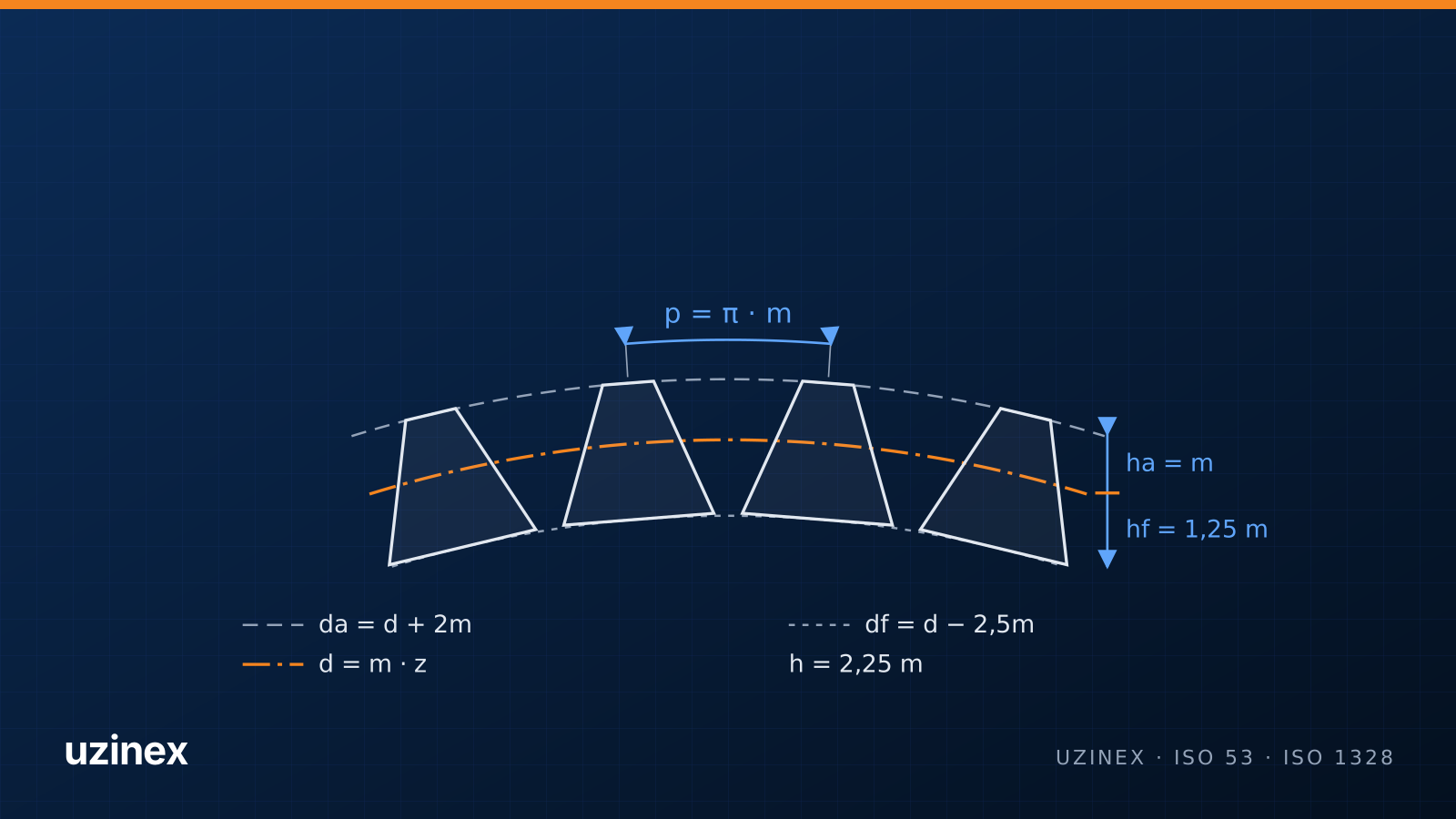
An involute spline has the same profile as a gear, so it is made the same way and on the same machines: the shaft is hobbed with a spline hob, and the hub is broached or shaped. The profile centres itself under load and has stronger roots than straight-sided splines.
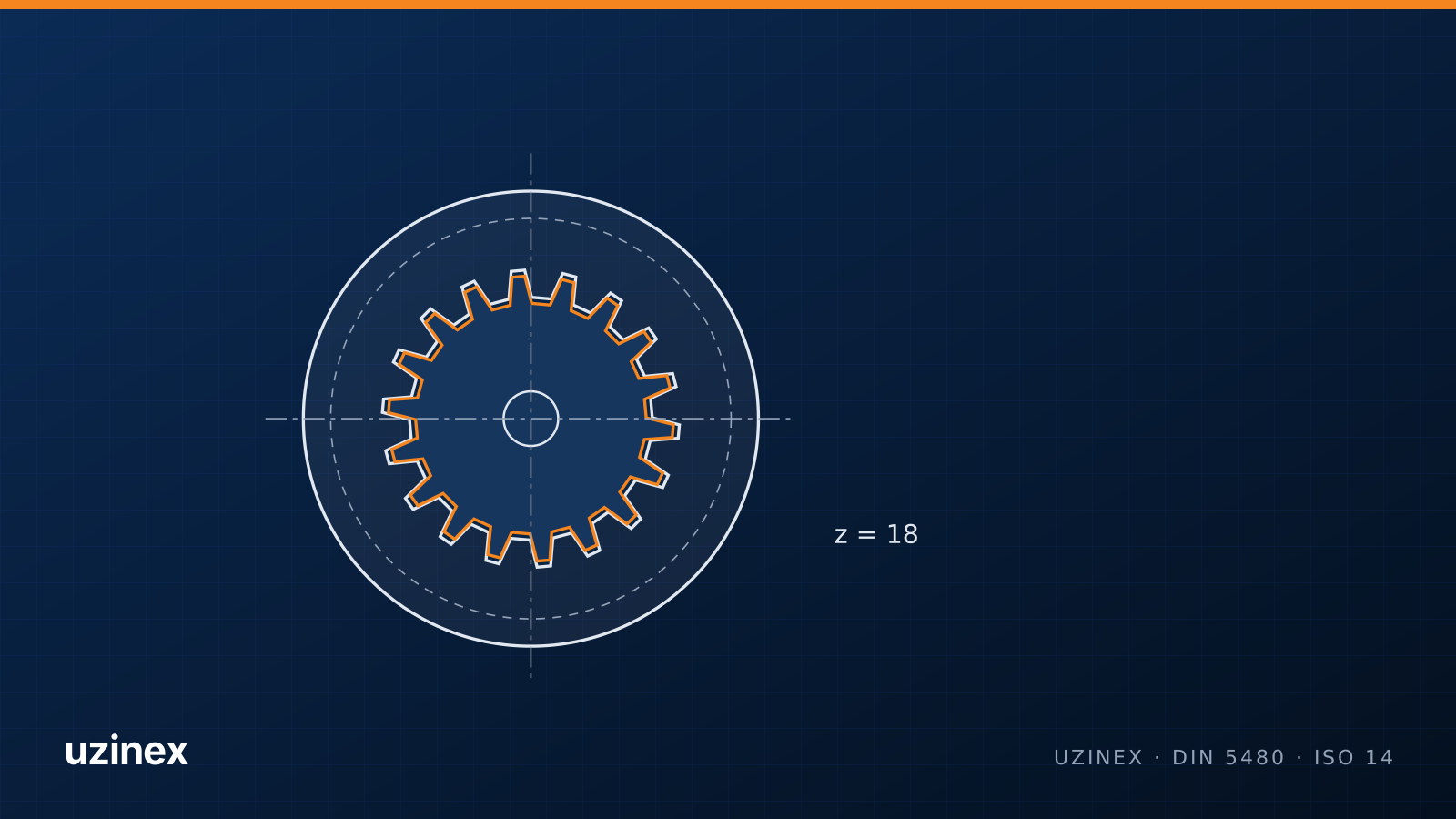
A DIN 5480 designation lists, in order: the part type (W for shaft, N for hub), the reference diameter, the module, the pressure angle (30°), the number of teeth and the tolerance class. It looks like DIN 5480 W 40 × 2 × 30 × 18 × 8f. The correct values for a given combination come from the standard's tables.
ISO 14 straight-sided splines
Straight-sided splines have parallel flanks and are designated by the number of splines, the minor diameter and the major diameter, for example 6 × 23 × 26. The standard defines a light series for fixed joints and a medium series for higher loads. You find them mostly on machine tools and older machines, where replacement parts are made from a sample.
How the hub is centred on the shaft
- On the flanks: the spline flanks do the centring; the usual option for involute splines.
- On the major diameter: the hub sits on the tips of the shaft splines; good running accuracy.
- On the minor diameter: centring on the root of the shaft splines; used for ground straight-sided splines.
The PTO spline shaft
The tractor power take-off (PTO) is the best-known spline shaft in farming. ISO 500 defines three main types:
| Type | Diameter | Splines | Rated speed |
|---|---|---|---|
| Type 1 | 35 mm (1 3/8") | 6 | 540 rpm |
| Type 2 | 35 mm (1 3/8") | 21 | 1,000 rpm |
| Type 3 | 45 mm (1 3/4") | 20 | 1,000 rpm |
Drive shaft yokes and the input shafts of towed machines wear over time, and replacement parts are often made by local workshops to the dimensions of the standard.
How a spline shaft is machined
- Turning to the final diameters, with grinding stock if needed.
- Hobbing the splines with a spline hob on a gear hobbing machine, exactly like a gear. Large batches are also cold rolled.
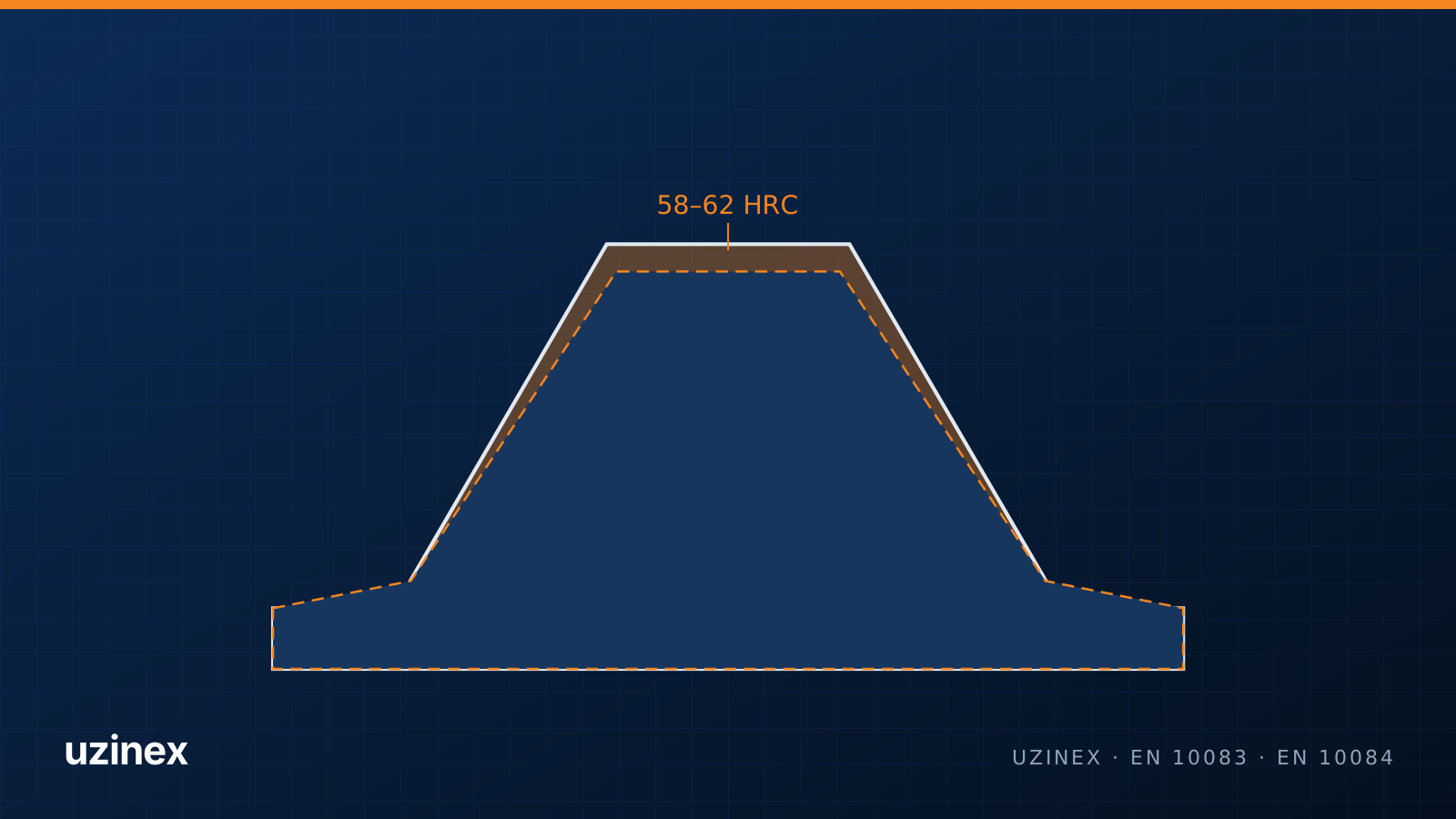
- Heat treatment: carburizing and hardening (16MnCr5) or induction hardening (42CrMo4, C45).
- Grinding of the splines and journals, when centring or accuracy requires it.
The splined hub is broached in batches or shaped for single parts. For steel selection, see choosing gear steel, which applies to spline shafts too.
On a CNC gear hobbing machine, a workshop goes from a gear to a spline shaft by changing the hob and the program. One such machine works at Miatec in Pechea, Galați County, Romania, presented in the gear hobbing machine case study.
Frequently asked questions
What is a spline shaft?
A shaft with teeth (splines) cut around its circumference that transmits torque to a hub with matching spaces. The torque is shared by all the teeth, and the hub can also slide along the shaft.
What is the difference between involute and straight-sided splines?
Involute splines have a gear profile, centre themselves under load and are hobbed. Straight-sided splines have parallel flanks and are found mostly on older machines.
Which standard covers PTO splines?
ISO 500. Type 1 has 6 splines on 35 mm (540 rpm), type 2 has 21 splines on 35 mm, and type 3 has 20 splines on 45 mm (1,000 rpm).
How is a DIN 5480 spline designated?
Part type (W shaft, N hub), reference diameter, module, 30° pressure angle, number of teeth and tolerance class, for example W 40 × 2 × 30 × 18 × 8f.
How is a replacement spline shaft made?
The blank is turned, then the splines are hobbed on a gear hobbing machine and heat treated. For a part copied from a sample, measure the diameters, the number of splines and the splined length.