The material of a gear decides how much it carries, how long it lasts and how it is made. In machine shops, three steels cover most gears: 42CrMo4, 16MnCr5 and C45. This guide compares their composition, heat treatments, hardness and uses, so you choose the right gear steel before hobbing.
In short: which steel for which gear
| Steel | Type | Approximate equivalent | Usual treatment | Flank hardness | Suited to |
|---|---|---|---|---|---|
| 42CrMo4 (1.7225) | alloy, quenched and tempered | AISI 4140 | quench and temper, optional induction hardening | about 28–34 HRC Q&T; 50–56 HRC induction hardened | loaded reducer pinions and gears, spline shafts |
| 16MnCr5 (1.7131) | alloy, case hardening | AISI 5115 | carburizing, hardening, low tempering | about 58–62 HRC at the surface | gearboxes, high-wear reducers, pump gears |
| 20MnCr5 (1.7147) | alloy, case hardening | AISI 5120 | carburizing, hardening, low tempering | about 58–62 HRC at the surface | larger or more heavily loaded gears than 16MnCr5 |
| C45 (1.0503) | carbon, quenched and tempered | AISI 1045 | normalized or Q&T, optional induction hardening | about 170–210 HB normalized; 50–55 HRC induction hardened | moderate loads, common spare parts, large gears |
Hardness values are indicative and depend on part size and treatment parameters.
42CrMo4: the through-hardening steel for loaded gears
42CrMo4 is a chromium-molybdenum alloy steel (about 0.38–0.45% C, 0.90–1.20% Cr, 0.15–0.30% Mo, per EN 10083-3). Molybdenum gives it good hardenability and temper resistance, so properties stay uniform across thicker sections.
It is often supplied already quenched and tempered, with a tensile strength of about 900–1,200 MPa depending on diameter. In that condition it can be hobbed directly, with no further treatment. For a hard surface, the flanks are induction hardened after hobbing while the core stays tough.
Choose it for: reducer pinions, gears under high and shock loads, spline shafts, and gears where you want to avoid carburizing distortion.
16MnCr5 and 20MnCr5: the case-hardening steels
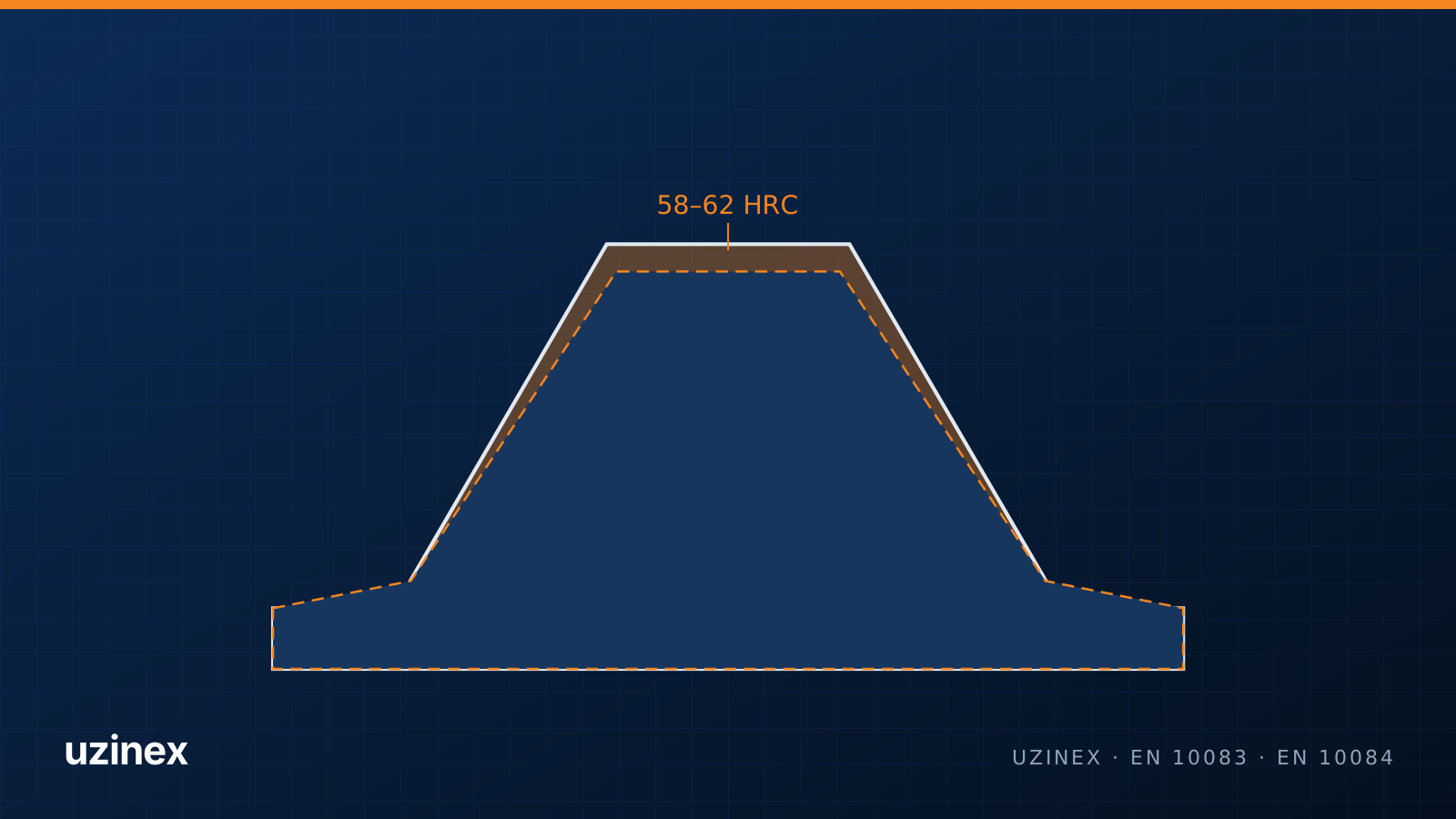
16MnCr5 (about 0.14–0.19% C, 1.00–1.30% Mn, 0.80–1.10% Cr, EN 10084) is low in carbon. Carburizing enriches the surface layer with carbon, and after hardening and low tempering it becomes very hard, around 58–62 HRC, while the core stays tough. The combination resists flank wear and tooth breakage.
20MnCr5 has slightly more carbon and manganese, so a stronger core; it is used for larger or more heavily loaded gears. An often-quoted rule of thumb: case depth around 0.15 × module.
Choose them for: gearbox gears, reducers with heavy flank wear, gear pump gears, any mesh where service life matters.
The treatment causes small distortions. When high accuracy is required, the flanks are ground after hardening.
C45: the carbon steel for moderate loads
C45 (about 0.42–0.50% C, 0.50–0.80% Mn, EN 10083-2) is the most widely used quality carbon steel in machine building. It machines easily, costs little and is available everywhere. Normalized, it has a hardness of about 170–210 HB; the flanks can be induction hardened to about 50–55 HRC.
Choose it for: moderately loaded gears, spare parts for older machines, large slow gears, prototypes.
Order of operations: when heat treatment happens
- Sawing and turning the blank to outside diameter and width, with grinding stock if needed.
- Quench and temper, if the material is not supplied that way (42CrMo4 and C45).
- Hobbing on the gear hobbing machine.
- Final heat treatment: carburizing and hardening (16MnCr5, 20MnCr5) or induction hardening of the flanks (42CrMo4, C45).
- Grinding of flanks and bore, when the accuracy grade requires it.
Case-hardening steels are hobbed soft, which spares the hob. Steels quenched and tempered above about 30 HRC need hobs made of tougher grades and gentler parameters. On a CNC gear hobbing machine, cutting parameters are saved per material in the part program.
Other gear materials
- Tin bronze (CuSn12): worm wheels, which slide against a hardened steel worm. More in the worm gear guide.
- Grey or ductile cast iron: large slow gears and geared housings, where vibration damping matters.
- Stainless steel (for example X20Cr13): food-grade and corrosive-media pumps.
- Engineering plastics (POM, PA6): quiet gears, light loads, running without lubrication.
How to choose, in short
- Moderate load, spare part, low cost: C45.
- High load, shocks, minimal distortion: 42CrMo4 quenched and tempered, possibly induction hardened.
- Heavy flank wear, long service life, gearboxes: carburized 16MnCr5 or 20MnCr5.
A gear workshop usually works with all three. Miatec, the workshop in Pechea, Galați County, presented in the gear hobbing machine case study, makes reducer pinions, pump gears and farm machinery parts. For the remaining gear dimensions, use the gear calculator.
Frequently asked questions
What is the equivalent of 42CrMo4 steel?
The closest American equivalent is AISI 4140, and the European material number is 1.7225. Composition and properties are given in EN 10083-3.
What does quenched and tempered mean?
Steel hardened and then tempered at a high temperature. The result combines strength and toughness better than the normalized condition. 42CrMo4 is often supplied quenched and tempered and can be hobbed directly.
Carburizing or induction hardening?
Carburizing gives a hard, uniform layer over the whole tooth, including the root, and suits low-carbon steels (16MnCr5, 20MnCr5). Induction hardening heats the flanks locally on medium-carbon steels (42CrMo4, C45) and distorts the part less.
Can I make a reducer pinion from C45?
Yes, for moderate loads, with induction-hardened flanks. For high or shock loads, 42CrMo4 or a case-hardening steel lasts longer.
What hardness does 16MnCr5 reach after carburizing?
Usually 58–62 HRC at the surface, with a tough core. Case depth is chosen from the gear module and the load.