An industrial laser is not bought, it is financed. Almost no financially healthy workshop ties up working capital in an asset it can pay for out of the very production it generates. This guide goes through the real instruments available to companies in Romania, with the advantages, the traps and the correct order of steps.
Why a laser is an easy asset to finance
Financiers love equipment with a clear secondary market and a long service life: exactly the profile of a fiber laser. For the bank or the leasing company, the machine is its own guarantee. In practice, this means simpler files and quick approval compared with an unsecured loan: through the 10 UZINEX financial partners, typical approval on equipment comes in ~48 hours, with a down payment from 0% and fixed instalments.
Instrument 1: financial leasing, the standard route
How it works: the financier buys the equipment, you use it and pay for it in instalments, and at the end it becomes yours at the residual value. Practical advantages:
- Working capital protected: the money stays in stock, salaries, growth;
- Predictability: a fixed instalment, plannable over 3 to 5 years;
- Advantageous tax treatment: interest and depreciation are deductible, and VAT is paid in stages with the instalments, not in full at purchase (confirm the exact details with your accountant; tax rules change);
- The correct calculation is simple: if the labour saved plus the additional production exceed the monthly instalment, the machine pays for itself.
The full details and the list of partners are on the UZINEX credit & leasing page.
Instrument 2: equipment credit
The classic bank alternative: you are the owner from day one, the interest can be competitive for companies with a good track record, and for guarantees there are state schemes that cover part of the risk. It makes sense especially when you want accelerated depreciation or when internal policy requires direct ownership of assets. The UZINEX team prepares the technical specifications and the pro forma invoice in the format required by the bank, the part that usually blocks files.
Instrument 3: European funds and government schemes
The non-repayable component changes the mathematics of the investment: on the active programmes, the support intensity can reach up to 75% for certain categories of beneficiaries and calls. Realities to keep in mind:
- The calendar is not yours: calls have windows; the investment is planned on the funding calendar;
- The technical file decides. Correct specifications, CAEN classification, scoring criteria: exactly the part that UZINEX prepares for customers, with accredited consultants alongside;
- On-time delivery is critical: a supplier that misses the implementation deadline can cost you the entire funding. That is why we have also delivered machines “by air” to catch grant deadlines.
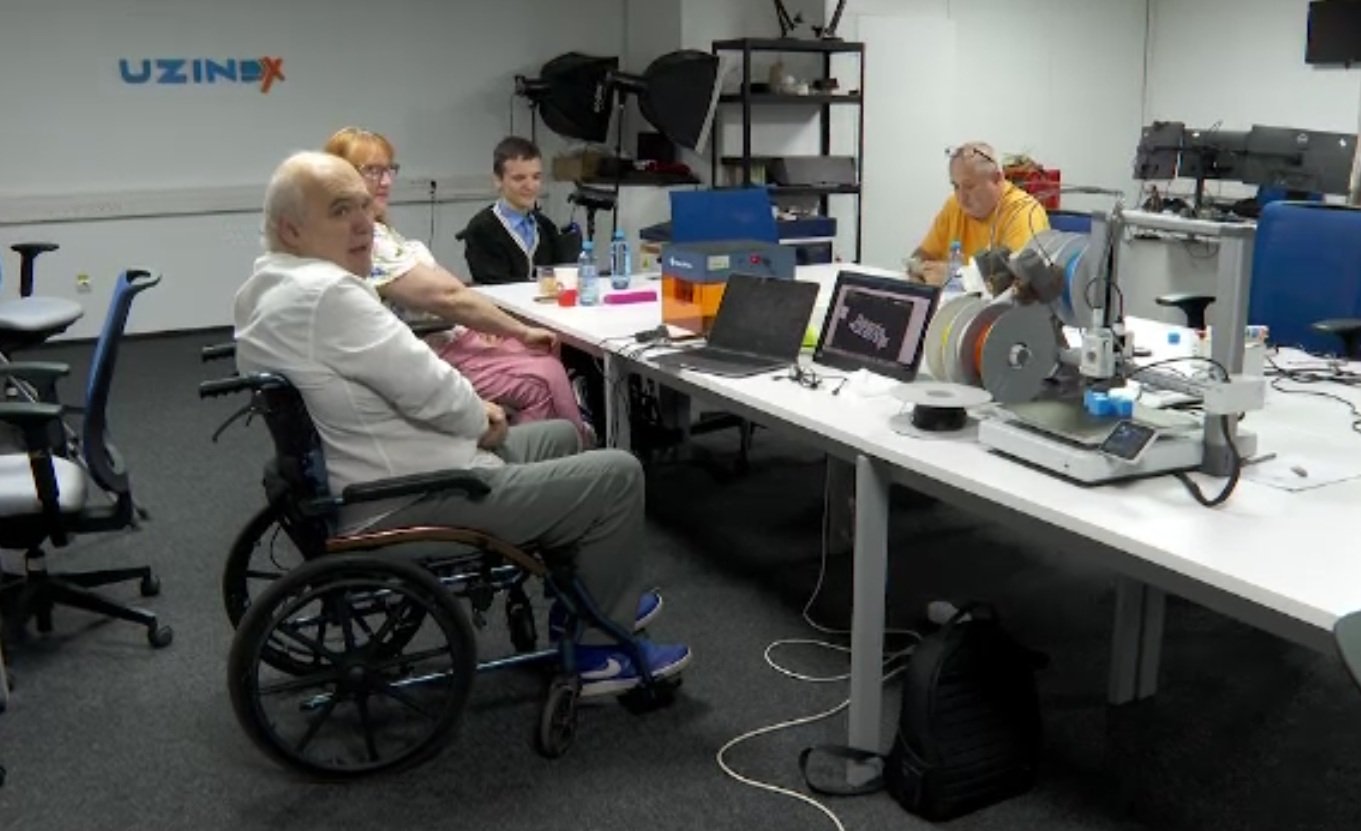
Proof that the model works for small companies, not just in theory: Fier-Forjat Limanu, a metal fabrication workshop that multiplied its production speed 5 to 6 times with an investment financed through non-repayable funds, delivered and commissioned by UZINEX.
Instrument 4: smart combinations
The best structures mix the instruments: a grant on the main equipment + leasing on peripherals; or leasing now, refinanced when the right call opens. Public procurement has its own route too: UZINEX equipment is eligible for SEAP/SICAP, with the technical file and conformity sheets prepared by us.
Two concrete structuring scenarios
Scenario 1: the first laser of a small workshop. The typical configuration: an economy fiber laser for workshops, financed entirely through leasing with a minimal down payment. The logic: the monthly instalment is compared directly with what you pay today for outsourced cutting plus the trips and deadlines that come with it; in many cases, simply bringing the cutting in-house covers the instalment. The risk is low: the asset is liquid, and the contract can be structured over the period in which you build your volume.
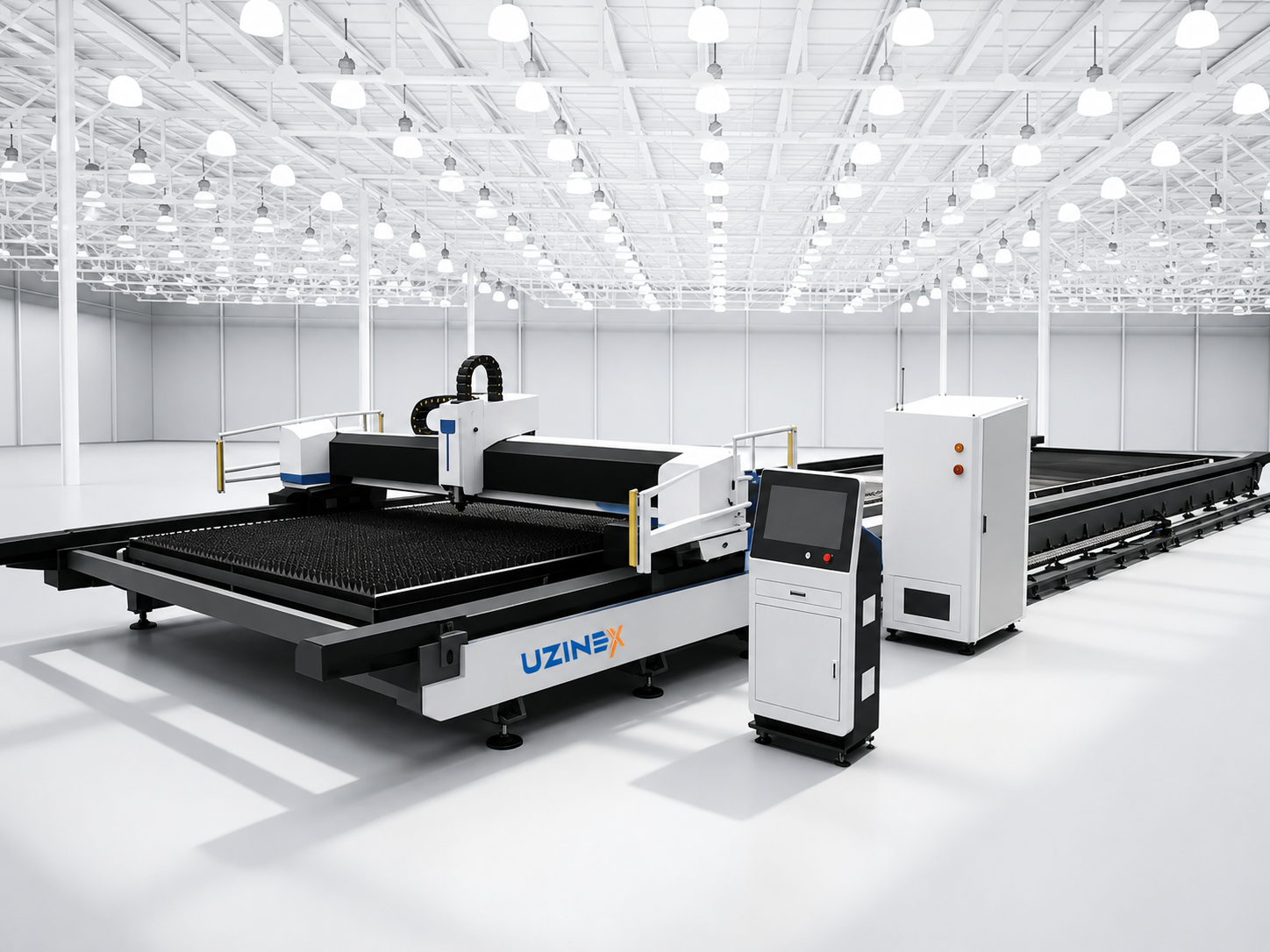
Scenario 2: the jump to production. The typical configuration: a platform of the WyCut S Series class sized on your parts, with mixed financing: a non-repayable component on the main equipment (when the right call is open) + leasing or credit on the difference and peripherals. Here calendar discipline and the technical file make the difference between a funded project and a missed one, and this is exactly where the UZINEX team comes in, from specifications to delivery within the implementation deadline.
The documents the financier will ask you for
The list varies by partner, but the core is always the same; prepare it in advance and you gain weeks: recent financial statements and an up-to-date trial balance, the certificate of incorporation status, the technical offer/pro forma for the equipment (we prepare it, in the required format), proof of the down payment if there is one and, for non-repayable funds, the eligibility documentation of the call. The technical part of the file (specifications, classifications, sheets) is the integrator's job, not your accountant's; that is how we treat it.
Frequently asked questions
What down payment does an equipment lease start from?
Typically, partner offers start from a 0% down payment for good financial profiles; the exact threshold depends on the age of the company, its figures and the equipment. That is why we work with 10 partners in parallel: the same file, several offers, you choose the best conditions.
My company is young, do I have a chance?
Yes, but the structure matters: a somewhat larger down payment, a suitable term, possibly state guarantees or programmes dedicated to start-ups. The Geomar Pitești case study is exactly the story of a workshop that started its major investment through a funding programme for small companies.
How long does the whole process take, realistically?
On classic leasing: days, not months; typical approval is ~48 hours from a complete file, and the rest is delivery logistics. On non-repayable funds: the call calendar rules; plan the investment around it, not the other way round.
The mistakes that cost money
- Waiting for “the funds” endlessly: if the machine pays for itself from production in 2 to 3 years, today's leasing beats next year's hypothetical grant. Calculate both scenarios with figures.
- Optimising only the instalment: a low instalment on an undersized machine is the most expensive saving possible. First the correct configuration (see the power selection guide), then the financing on it.
- Signing without the 5-year total: compare the total cost (down payment + instalments + residual + insurance), not the headline interest.
- Forgetting operating costs: the instalment is only one part; budget for operation too, so the belt does not tighten exactly when the machine starts producing.
Checklist before you sign
Six two-minute checks that prevent five-year regrets:
- The total cost over the whole term (down payment + all instalments + residual value + insurance), on paper, not from conversation;
- What happens on early repayment: penalties, conditions;
- Who insures the equipment and at what value;
- Whether the 60-month warranty and the service conditions remain untouched by the financing structure (at UZINEX: yes, whatever the financier);
- The delivery deadline in writing, aligned with the implementation deadline if there is non-repayable funding;
- The technical configuration attached to the contract: exactly the machine sized on your parts, not “an equivalent piece of equipment”.
The concrete steps, in the right order
- The technical configuration on your parts, with an engineer, from the range of fiber lasers;
- The pro forma + the recommended financing structure (leasing / credit / grant / mix): UZINEX works with all 10 partners, so you get a comparison, not a single offer;
- The file, prepared by us in the financier's format;
- Delivery, installation, training: included, with a 60-month warranty and service in under 24 hours.
The first step takes one message: write to us which parts you cut and what volumes you have, and the rest becomes a calculation, not a gamble. And if your company buys through public procedures, the same equipment, the same technical file and the same service conditions also work on the SEAP/SICAP route, with the conformity documentation prepared by our team.