At a workbench in our workshop in the Tehnopolis Park, next to a fiber laser and a 3D printer that hums slowly, a man in a wheelchair studies a technical drawing. In a few weeks it will be his work schedule. The Știrile ProTV report carried this scene into the homes of millions of Romanians and named, simply, an injustice that the economy has repeated for years: there are people perfectly capable of designing, programming and producing who remain outside the factory because nobody opens the workshop door for them.
At UZINEX we decided to open that door ourselves. That is how the UZINEX Industry 4.0 Academy was born, the first centre in Romania where people with locomotor disabilities train for free on real industrial equipment, until they become competent, autonomous and in demand on the job market.
Watch the full report on Știrile ProTV (in Romanian)
The problem is not the disability. It is access.
“Romania is not ready for people in wheelchairs” is one of the sentences that stay with you after the report. We say it without resentment, as a diagnosis. Thousands of people with locomotor disabilities have exactly the mind, patience and precision that a modern shop floor needs, yet they meet the same barriers: steps, job descriptions written for a “standard” body, employers who assume, before asking, that it cannot be done.
Industry 4.0 changes the terms of the problem. Physically heavy work is increasingly taken over by machines, and the value shifts to the operator who understands the process, reads a drawing, writes a program and controls quality. These are exactly skills that are learned sitting down, with the mind and the hands, not with the back. For someone who moves in a wheelchair, a digitalised workshop is not a limitation but the fairest playing field they have ever had.
The workshop: what you learn, concretely
The trainees do not study from slides. They work in our workshop in Iași, on the five industrial technologies at the site, plus an Astorino educational robot. Each track starts from the basics and ends with a real, deliverable part. Here is what each one means, in terms of process and skills acquired:
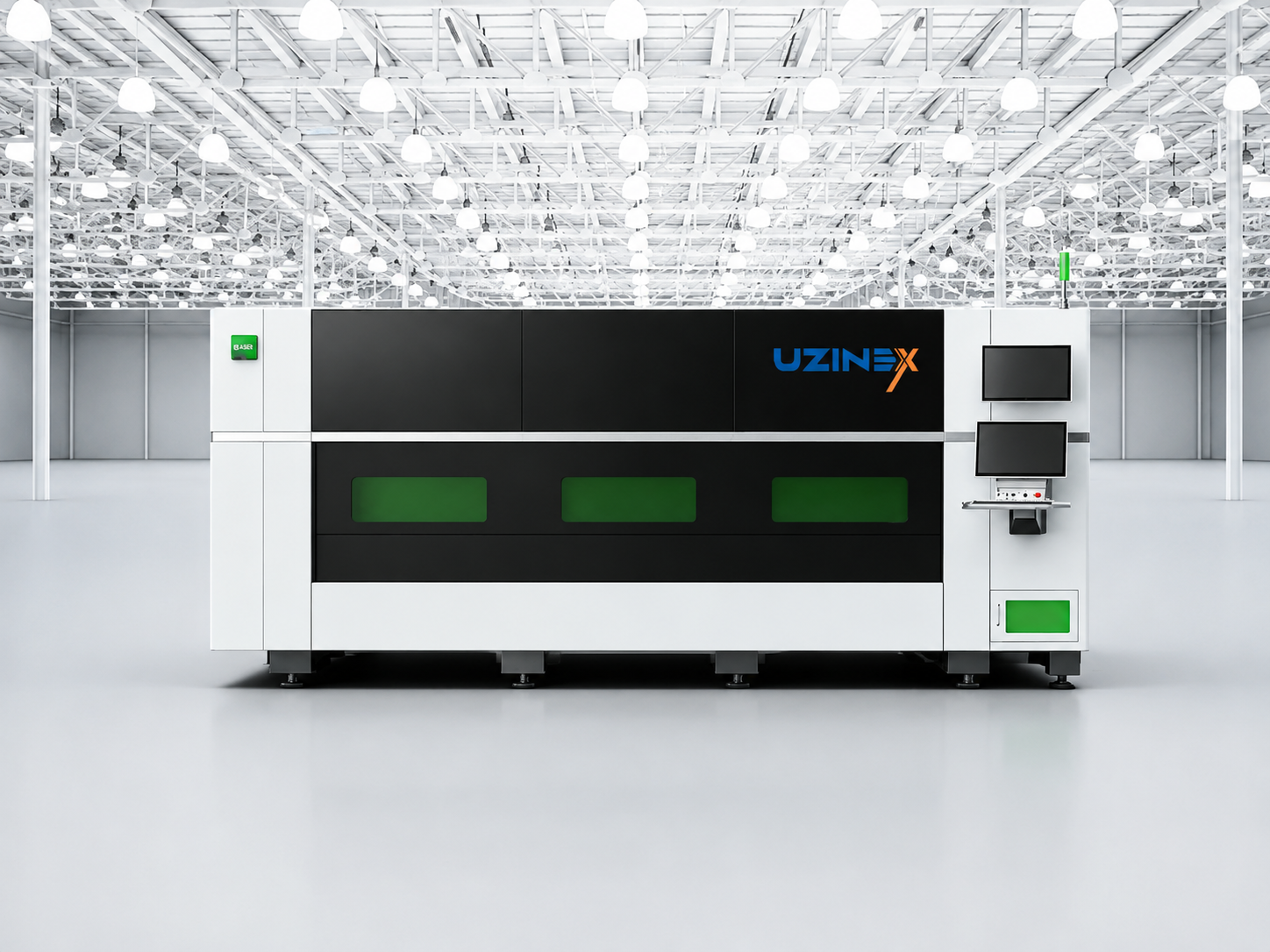
- Fiber laser cutting. A fiber laser source for cutting steel, stainless steel and aluminium sheet. Trainees learn nesting for minimum material use, cutting parameters (power, feed rate, type and pressure of the assist gas), adjusting the focal point and the kerf width, plus controlling the edge and burrs on different thicknesses.
- CNC machining, milling and turning. The complete path from technical drawing to measured part: reading dimensions and tolerances, the machine's coordinate systems, choosing and fixing tools, clamping the blank, generating toolpaths in CAM, simulating and running the G-code program, then checking the part with metrology instruments.
- Robotics and the Astorino educational robot. A six-axis training robot on which trainees program point-to-point motion, continuous trajectories and pick and place sequences. They learn the robot's coordinate systems, the safety zones of the cell and the logic of an application, before moving on to cobots and industrial robots.
- Automation and PLC. The logic of an automated cell: sensors and pneumatic actuators, digital inputs and outputs, ladder logic programming, timers, counters, safety interlocks and commissioning a sequence that really starts and stops correctly.
- Digitalisation and Industry 4.0. How machines are connected to a system that collects data in real time through industrial protocols, calculates indicators such as equipment utilisation and downtime, shows them on dashboards and prepares the ground for predictive maintenance.
- Design and 3D printing. Modelling a part in 3D, preparing the file for printing (slicing the model, supports, infill density) and the actual printing. It is exactly the step viewers saw when a trainee said they wanted to design an object and then print it.
These tracks are not isolated. A graduate comes to understand the whole chain of a modern part: it is drawn in 3D, cut with the laser, machined on the CNC, handled by a robot, commanded by a PLC and tracked through a data system. That makes them useful to any shop floor, not just one.
A path with a mentor, at each person's pace
Each trainee has an engineer mentor alongside and moves forward at their own pace, not by a rigid schedule. “We are building the first educational centre for people with locomotor disabilities,” says Sorin Baciu, CEO of UZINEX, who started the project together with engineer Cristian Munthiu. Learning is applied from day one: not theory followed by practice, but practice explained as it happens.
At the end, each person leaves with three things that count in front of an employer: a video portfolio of the parts and programs made, a demonstrable skill on a concrete machine and a UZINEX recommendation to our network of industrial partners. We do not promise a job on paper. We build the evidence with which a person can claim their own place.
The first series: July 2026, in Iași
We start in July 2026 with a first small series, between three and five trainees, at the site in the Tehnopolis Science Park, 10 Poitiers Blvd., Iași. We do not ask for a CV, diplomas or technical experience. We ask for the desire to learn and the availability to be present in the workshop. The rest we build together, on real equipment.
Accessibility is part of the project, not a footnote. We adapt the workstation and the context to each trainee's needs, and at enrolment we ask directly what support is needed, so that we find the solution before the first day.
A model designed to be copied
The Iași series is not a one-off gesture but a prototype. Everything that works here, from the curriculum to the way we adapt a workstation, becomes an open guide that any factory in the country can take and apply. If the model is replicated nationwide, we are talking about thousands of people brought back into the workforce, in roles that pay well and that did not exist for them a few years ago.
For UZINEX, the benefit is just as real: a new line of skills, a closer link with the industrial community and engineers trained right around our equipment. Something good for people can be, at the same time, something healthy for a business.
The second Romania is built in factories
We are building the second Romania not at the margins but in the halls, where a person considered “hard to hire” ends up operating a laser worth tens of thousands of euros and delivering parts used by real customers. The ProTV report was the first step, the moment the country saw that it can be done. The next step is the people who will walk into the workshop.
Do you want to enrol, or do you know someone suitable? Enrolment for the first series is open, free and without obligations, on the UZINEX Industry 4.0 Academy page.