The purchase price is only the first line in the calculation for a fiber laser. The machine is judged on its total operating cost: energy, assist gas, consumables, maintenance and (the chapter everyone forgets) the labour it removes or adds. This guide goes through each cost category, with the practical benchmarks you need to build your own calculation.
1. Electricity: the structural advantage of fiber
Fiber laser sources have high electrical efficiency compared with earlier generations of lasers; that is one of the reasons they conquered the market. The total consumption of the system includes the source, the chiller (cooling), the extractor and the drives; as a practical rule, size the electrical installation by the total installed power on the machine's data sheet, not only by the kW of the source. On the usual workshop configurations (1.5 to 6 kW sources), we are talking about a consumption that is easy to calculate: installed power × hours of actual cutting × your energy tariff. Important: the laser draws full power only when it cuts; good nesting programming directly reduces the bill.
2. Assist gas: this is where you win or lose every month
At many workshops, gas is the largest variable operating cost:
- Oxygen, typically used for carbon steel: cheap, but leaves an oxidised edge (usually acceptable for parts that are welded or painted).
- Nitrogen, mandatory for clean stainless steel and aluminium and increasingly used on thin steel too for an oxide-free edge: more expensive, with a consumption that rises noticeably with thickness and pressure.
- Compressed air: the economical alternative on thin sheet, with a correctly sized compressor and drying/filtration system; edge quality is intermediate.
Real levers for reduction: choosing the right gas for each job (not “nitrogen for everything”), pressures and nozzles according to the machine's cutting tables, and at high volumes, analysing the switch from cylinders to a cryogenic tank or a nitrogen generator, which changes the order of magnitude of the cost per cubic metre. The exact figures depend on your local gas supplier; ask for their offer on your estimated consumption, not per unit.
3. Cutting head consumables
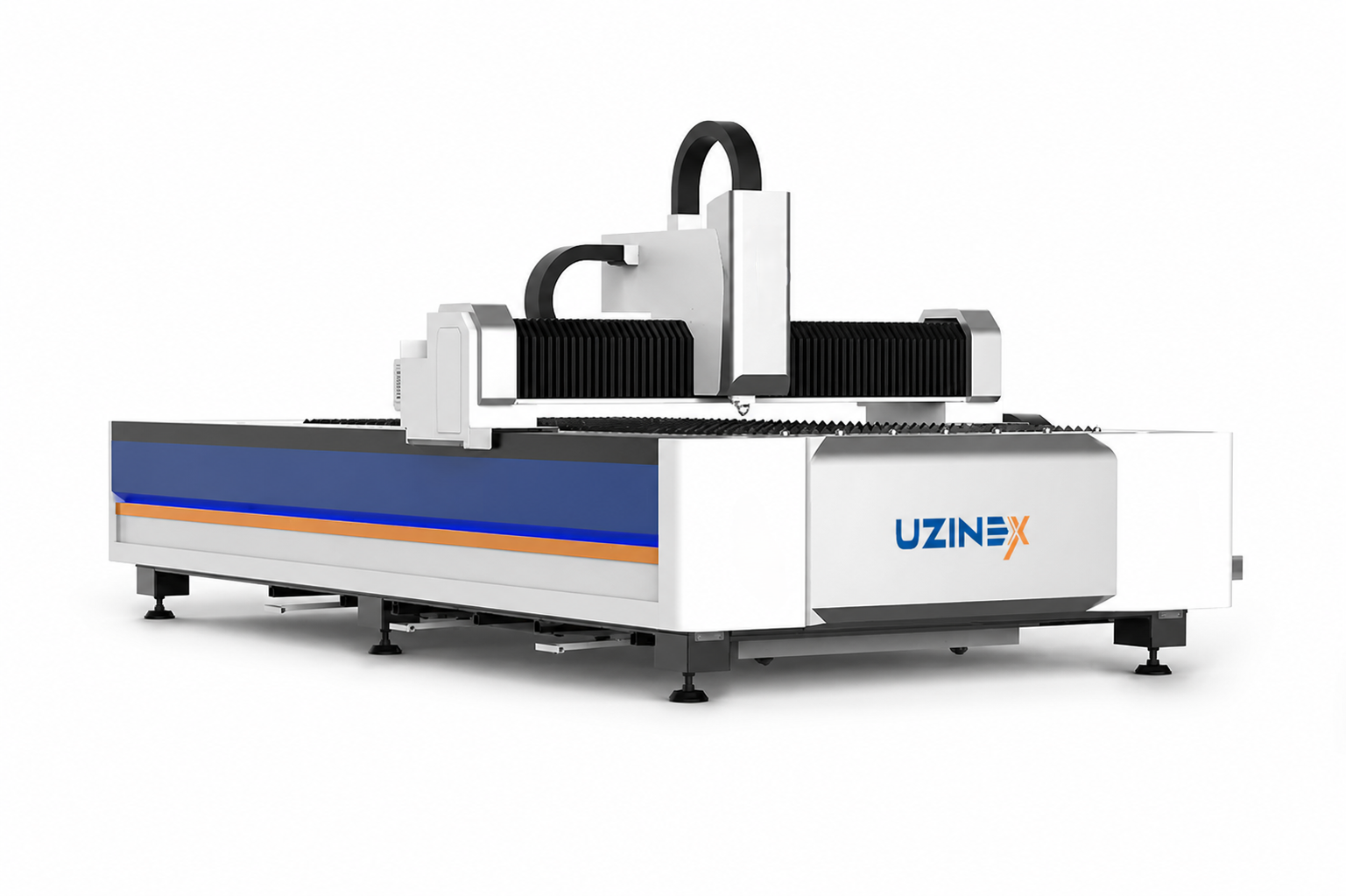
Nozzles, protective lenses, ceramic rings: individually cheap parts, but whose replacement rate depends almost entirely on operating discipline: nozzle centring, cleanliness of the protective lens, quality of the air/gas, cutting on the correct tables. A trained operator replaces consumables several times less often than one left to learn alone; that is exactly why UZINEX deliveries include operator training, not just the machine. Modern systems help too: the fully enclosed WyCut FE series comes with intelligent monitoring of the cutting process, which catches parameter drift before it becomes scrap and consumption.
4. Maintenance and service
Routine maintenance of a fiber laser is simpler than its reputation: cleaning the exhaust system, checking the chiller, greasing the guides, replacing the extractor filters. The critical part is another: what happens when something really stops. Here the support structure matters more than any reliability percentage in a brochure: UZINEX equipment comes with a standard 60-month warranty, phone support and on-site intervention in under 24 hours nationwide, plus the interactive AI manual included at delivery, which resolves part of the diagnoses on its own. For critical fleets there are preventive maintenance subscriptions with SLA.
The practical reference for what correct long-term operation means: AIRONE Inox, years of continuous production on a 6 kW fiber laser, with no major interventions.
5. Labour: the cost that changes the whole calculation
A modern laser with good nesting does in an hour what a person with an angle grinder or a guillotine did in a day, and the part comes out ready for the next stage, with no deburring. In the total cost calculation, the labour saved (or reallocated to value-adding operations) is often greater than all the operating costs put together. Availability also comes in here: machines with an automatic pallet changer load and unload while cutting, turning the same operator hours into more metres cut.
What the cost structure looks like, roughly
| Category | Cost type | Main control lever |
|---|---|---|
| Energy | Variable | Good nesting, actual cutting vs idling |
| Assist gas | Variable, dominant on stainless steel | The right gas per job; nitrogen source at high volumes |
| Head consumables | Small variable | Operator training, parameters from the tables |
| Maintenance | Small fixed | Preventive routine; the 60-month warranty covers the rest |
| Labour | Large fixed | Loading automation, pallet changer |
We do not publish absolute “industry average” figures because they would be false in both directions: your real cost depends on your material mix, your energy tariff and your gas supplier. The correct calculation is done on your data, and it takes a conversation, not a week.
The year 1 budget: the complete list, so nothing surprises you
Besides the instalment or depreciation of the machine, year 1 contains lines that many people discover along the way. Put them in the budget from the start:
- The electrical connection and any resizing of the switchboard;
- The gas installation: cylinders/tank, regulators, pipework, or compressor + dryer for cutting with air;
- Insurance for the equipment (mandatory with leasing, recommended anyway);
- A set of spare consumables (nozzles, protective lenses): cheap, but it saves production days;
- Extra training hours 1 to 2 months after start-up, when the operators already have the right questions;
- Nesting/CAM software if your workflow does not already have it.
None of the lines above is dramatic: all are small compared with the machine. What is dramatic is discovering them in the week of installation.
How to reduce the cost per part without touching the machine
The biggest cost reserves are not in the hardware: disciplined nesting (parts grouped by material and thickness, not cut “as the orders come”) reduces scrap, parameter changes and running hours at the same time; batch planning by material day cuts the dead time of gas/parameter changes; preventive maintenance kept up to date is the difference between a protective lens changed on time and a whole series of badly cut parts. All three are organisational practices, not investments, and all three are taught in training.
Two questions that keep coming back
How much does a laser “eat” per month, in money?
The only honest answer: it depends on the hours of actual cutting, the material mix and your energy and gas tariff; that is why we refuse to publish an “average” figure that would mislead everyone. What we can do instead: the exact calculation on your data, in the technical offer, line by line.
Is it worth having your own nitrogen (generator) or staying on cylinders?
The threshold is simple to calculate: your monthly nitrogen consumption × the difference in cost per cubic metre vs the investment in the generator. Below a certain volume, cylinders remain the right choice; above it, the generator pays for itself surprisingly fast. It is a 10-minute calculation with your gas supplier's figures, and we do it together at configuration.
Conclusion: ask for the calculation, not the estimate
Before buying, ask the integrator for exactly three things: the cutting times on YOUR parts, the estimated gas consumption on your material mix and the complete cost structure over 5 years, including financing. A UZINEX engineer builds this calculation for you on the suitable configurations from the range of fiber lasers, from the economy model for workshops to production systems, and the leasing instalment goes into the same table, so you can compare directly: total monthly cost vs what the machine produces monthly.