“Laser or plasma?” is probably the most frequent question at a first serious cutting purchase. The honest answer: it depends on what you cut, how thick and for whom. The comparison below puts the two technologies head to head on the criteria that matter in the workshop, not in brochures.
How they work, in two sentences
The fiber laser concentrates light into a spot of a few tenths of a millimetre and melts or vaporises the material, with an assist gas that blows out the melt. CNC plasma passes an electric arc through an ionised gas and “burns” the cutting path. The difference in principle explains almost everything that follows: the laser is a precision tool, plasma is a tool of force.
Precision and edge quality
Here the difference is categorical. A modern fiber laser works with positioning precision on the order of hundredths of a millimetre (the WyCut S Series platform in the UZINEX catalogue is specified at ±0.03 mm, and the high-precision WyCut HP series goes down to ±0.01 mm) with straight, clean edges, ready for welding or painting. Plasma produces an edge with a slight taper and a wider heat-affected zone, which for many applications requires further processing.
In practice: if your parts are visible (B2C products, decorative stainless steel, HoReCa) or are assembled with tight tolerances, the laser has no competition. The Geomar Pitești case study is exactly about this: a workshop that pivoted to the “clean sheet metal” niche because the laser edge is a selling point for the end customer.
Thicknesses: where plasma still makes sense
Plasma remains competitive on thick carbon steel plate, where the cost per metre cut can be lower and the edge quality requirement is relaxed (massive welded structures, parts that get machined anyway). The boundary has, however, moved steadily upward: high-power fiber sources today cut thicknesses that a few years ago were exclusively plasma territory. The top series in the catalogue cut carbon steel up to 40 to 45 mm, and special floor-rail configurations, designed for ultra-thick plates, go significantly above this threshold (WyCut GR Series).
The practical rule: below about 20 mm of carbon steel, the laser almost always wins on quality, speed and total cost; on large thicknesses, the calculation must be done on your parts, with both technologies on the table.
Speed on thin sheet
On thin sheet, where most metal fabrication shops work, the fiber laser is dramatically faster, with feed rates from tens to hundreds of metres per minute on modern machines (140 m/min on the S platform, up to 300 m/min on the speed series). Plasma does not play in this league, and the difference shows directly in parts per shift.
Costs: purchase vs operation
- Purchase: plasma starts cheaper; that is its main historical argument. The gap has narrowed a lot, however, with entry-level fiber lasers (see the economy laser for workshops in the catalogue).
- Consumables: plasma uses up nozzles and electrodes at a rate you feel every month; on the laser, the head consumables (nozzles, protective lenses) have a much gentler regime in correct operation.
- Energy and gas: fiber sources have high electrical efficiency; the cost of the assist gas (nitrogen/oxygen) depends on the material and is detailed in our operating cost guide.
- Post-processing: the forgotten chapter in the calculation. If every plasma part needs deburring, that labour is a cutting cost, even if it shows up on a different budget line.
Quick decision table
| Criterion | Fiber laser | CNC plasma |
|---|---|---|
| Edge quality | Excellent, no post-processing | Often needs finishing |
| Precision | ±0.01–0.05 mm (depending on platform) | Tenths of a mm |
| Thin sheet (≤6 mm) | Clearly superior (speed + quality) | Works, but loses on both |
| Thick steel (>25 mm) | Possible with large sources / dedicated configurations | Still competitive on cost |
| Visible stainless steel / aluminium | The industry standard | Rarely acceptable as a final finish |
| Purchase cost | Higher (falling) | Lower |
| Total cost per part, series | Usually lower on thin/medium | Lower only in thickness niches |
Operating on the shop floor: fumes, noise, safety
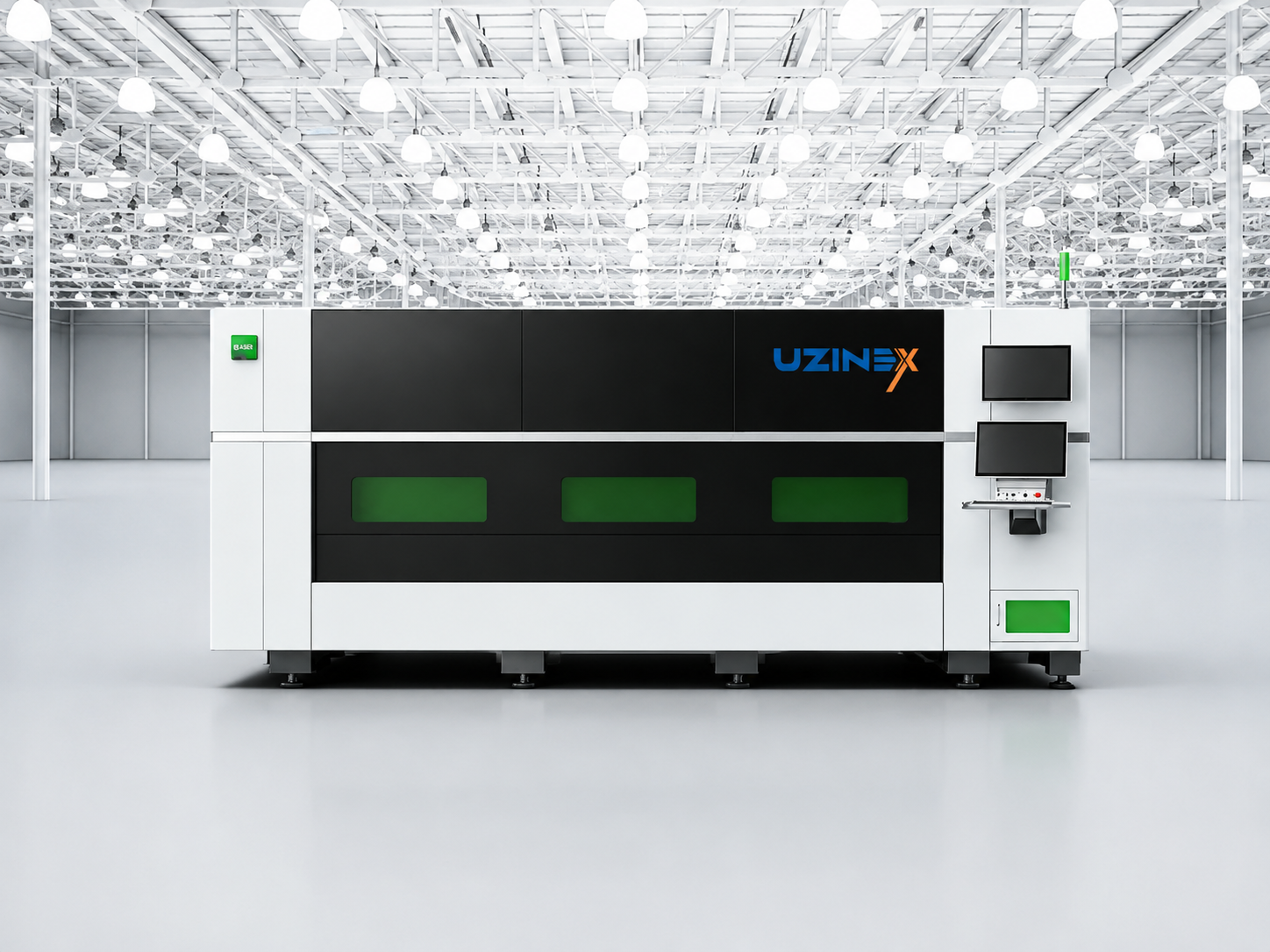
A chapter rarely discussed at the sale, relevant every day in production. Plasma generates high noise, intense arc light and large volumes of metal fumes: extraction and operator protection are mandatory and cost money. The fiber laser is noticeably more civilised on the shop floor, and the fully enclosed variants take the discussion to another level: the fully enclosed WyCut FE series, with fume extraction over seven zones, keeps the shop atmosphere clean and the process light isolated, relevant both for permits and for the people who work next to the machine eight hours a day.
How to calculate the cost per part correctly
Whatever the technology, the method is the same, and it is the only comparison that matters:
- Choose 3 to 5 representative parts (not the simplest, not the exception);
- Ask for the cutting time on each, on both technologies, at the edge quality you need;
- Add the variable cost per hour (energy + gas + consumables) of each machine;
- Add the total labour, including deburring where it exists;
- Divide by the parts and compare. Only now does the purchase price, turned into a monthly instalment, enter the discussion.
Often the result is counterintuitive: the machine that costs more to buy comes out cheaper per part before the end of the first year. But that is not asserted; it is calculated, on your figures.
Frequently asked questions
Can I replace my existing plasma with a laser without changing the workflow?
Usually yes: the laser takes over the existing drawings, and the parts come out ready for the next stage, which usually simplifies the workflow (deburring disappears). The check is done on the nesting of your parts.
Is there a volume threshold below which the laser is not justified?
Less than people think: for small workshops there are dedicated configurations, designed as a first machine (see the economy laser for workshops), and the leasing instalment on such configurations competes with the cost of outsourcing the cutting.
And for tubes and profiles?
There the comparison is no longer even posed in these terms: dedicated tube and profile laser machines cut, notch and prepare the ends for welding in a single pass, operations that manual plasma or classic cutting do in three steps and three clampings.
Retraining operators: simpler than it seems
The unspoken fear of many owners: “my people know plasma, not laser”. In practice the transition is surprisingly smooth: the plasma operator already understands drawings, nesting and parameter discipline; what they learn new are the laser's cutting tables, the gases and head maintenance. On UZINEX deliveries, the training at commissioning is included and is done on your own parts, and the machine's interactive AI manual answers day-to-day questions, in Romanian, right on the shop floor. The reality in the field: operators who have made the switch refuse to go back; the clean edge and the lack of deburring change their working day, not just the part's technical sheet.
The practical verdict
Choose fiber laser if: you cut mostly below 20 to 25 mm, you work stainless steel or aluminium, you sell parts that are visible, you want to eliminate deburring or you plan growth in series. Choose plasma if: you cut almost exclusively thick carbon steel, edge quality is secondary and the entry budget is the absolute constraint. And if you are between the two, the situation of most workshops, the correct calculation is done on your parts: send the drawings, and a UZINEX engineer puts the times and costs on both technologies side by side, with figures, not impressions.
The full catalogue of fiber lasers covers everything from workshops at the start of the road to non-stop production, and leasing finance makes the price gap between technologies much less dramatic than it looks on the pro forma invoice: it is judged in monthly instalments compared with the labour saved.